
Why Chasing Losses Never Works in Crypto Casinos

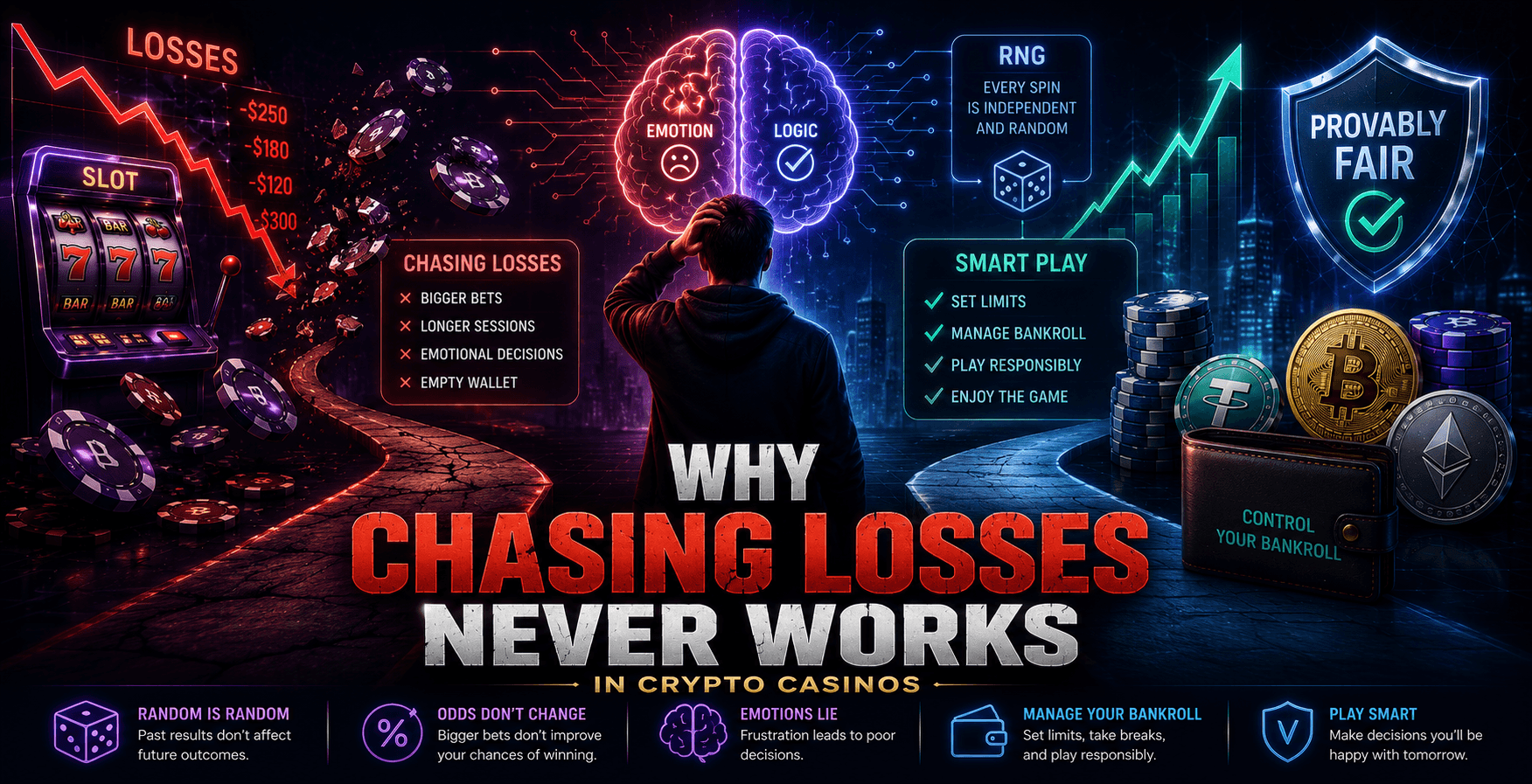
Every casino player knows the feeling. A session starts with optimism, but after a few unlucky spins or losing hands, frustration begins to take over. Instead of walking away or sticking to the original plan, many players decide to increase their bets, extend their session, or convince themselves that a big win must be just around the corner. This behavior is known as chasing losses, and it has little to do with strategy. It's a psychological reaction that affects beginners and experienced players alike.
The idea is easy to understand. After losing money, recovering it quickly feels like the most logical next step. Unfortunately, casino games don't work that way. Whether you're playing with Bitcoin, Ethereum, or stablecoins, the mathematics behind the games remain exactly the same. Previous results don't influence future ones, and increasing the size of your wager doesn't improve your chances of winning. The only thing that changes is the amount of money at risk.
Why We Feel the Need to Win It Back
Human beings don't experience winning and losing in the same way. Studies in behavioral economics have shown that the emotional impact of losing money is often stronger than the satisfaction of winning the exact same amount. This concept, commonly known as loss aversion, explains why a losing streak can quickly lead to emotional decision-making.
Instead of viewing each wager as an independent event, players often begin thinking about what they've already lost. The goal shifts from enjoying the game to recovering previous losses, and that's where rational thinking starts to disappear. Decisions become increasingly driven by frustration rather than probability, making it much easier to ignore pre-planned limits or abandon a sensible bankroll strategy.
Randomness Doesn't Care About Previous Results
One of the biggest reasons players chase losses is the belief that a game somehow "owes" them a win.
Imagine playing a slot machine that hasn't produced a significant payout for several hundred spins. It's tempting to believe that a jackpot is becoming more likely simply because it hasn't happened in a while. In reality, every spin is generated independently through a Random Number Generator (RNG). The software has no memory of previous outcomes, which means the probability of winning remains exactly the same whether the last ten spins were all losses or all wins.
This misunderstanding is known as the Gambler's Fallacy, and it has influenced casino players for decades. The human brain naturally searches for patterns, even in completely random events, but randomness doesn't work that way. Every new spin, card, or dice roll begins with a clean slate.
Bigger Bets Don't Improve Your Chances
Perhaps the most common response to a losing streak is increasing the size of the next wager. The thinking is simple: if a larger bet wins, it can recover several previous losses at once.
While this may feel like a sensible strategy in the moment, it doesn't affect the mathematics behind the game. The RTP remains unchanged, the house edge stays exactly the same, and the RNG continues generating completely independent outcomes. Betting ten times more doesn't make a jackpot more likely—it simply means you'll either win or lose a larger amount of money on that particular round.
This is why chasing losses often accelerates bankroll depletion instead of solving the original problem.
Cryptocurrency Doesn't Change the Odds
Because crypto casinos operate differently from traditional online casinos, some players assume that using Bitcoin or other cryptocurrencies somehow affects the outcome of games. In reality, cryptocurrencies only change the payment method, not the mathematics behind the games themselves.
Whether you're betting with Bitcoin, Ethereum, USDT, or another digital asset, the probabilities remain identical. A slot with a 96% RTP will continue to have a 96% RTP regardless of the currency being used, and a provably fair dice game remains random no matter how large or small the wager.
Crypto technology improves payment speed, transparency, and accessibility—but it doesn't alter the fundamental odds.
A Better Way to Think About Your Bankroll
Experienced players rarely try to recover every losing session because they understand that variance is part of gambling. Instead of reacting emotionally to short-term results, they approach each session with a predefined budget and realistic expectations.
That doesn't guarantee success, but it does reduce the likelihood of making impulsive decisions. Walking away after reaching a personal limit isn't admitting defeat—it's recognizing that randomness cannot be controlled through emotion or larger bets.
The goal isn't to eliminate losses entirely. That's impossible in games based on probability. The goal is to make decisions that remain consistent regardless of whether the previous few rounds ended in wins or losses.
Winning Streaks Can Be Just As Dangerous
Interestingly, emotional decision-making doesn't only happen after losing.
A series of wins can create the illusion that a player has discovered a successful strategy or entered a "hot streak." This often leads to overconfidence and larger wagers based on the belief that good fortune will continue indefinitely.
From a mathematical perspective, however, winning streaks are no different from losing streaks. Every new round remains independent of everything that happened before it. Recognizing this helps players stay objective during both positive and negative sessions instead of allowing emotions to dictate their decisions.
Understanding the Psychology Behind Gambling
Learning how casino games work is only part of becoming a smarter player. Understanding how your own mind reacts during a session is equally important.
Knowing about RTP, house edge, and RNG provides a solid foundation, but recognizing emotional triggers is what allows that knowledge to be applied in practice. The urge to chase losses isn't a sign of poor intelligence or lack of experience—it's a natural psychological response that many players experience. The difference is that informed players recognize the feeling without allowing it to dictate their next decision.
Final Thoughts
Chasing losses is one of the oldest mistakes in gambling because it appeals to emotion rather than probability. Losing streaks can be frustrating, but increasing bet sizes or extending a session doesn't change the mathematics behind casino games. Random Number Generators continue producing independent outcomes, the house edge remains constant, and previous results have no influence on what happens next.
Understanding these principles won't eliminate the risk that comes with gambling, but it can help players make calmer, more rational decisions. In the long run, the most valuable advantage isn't a betting system or a lucky streak—it's understanding how the games work and recognizing when emotions are trying to take control.