
Can a Crypto Casino Refuse to Pay Your Winnings? Know Your Rights

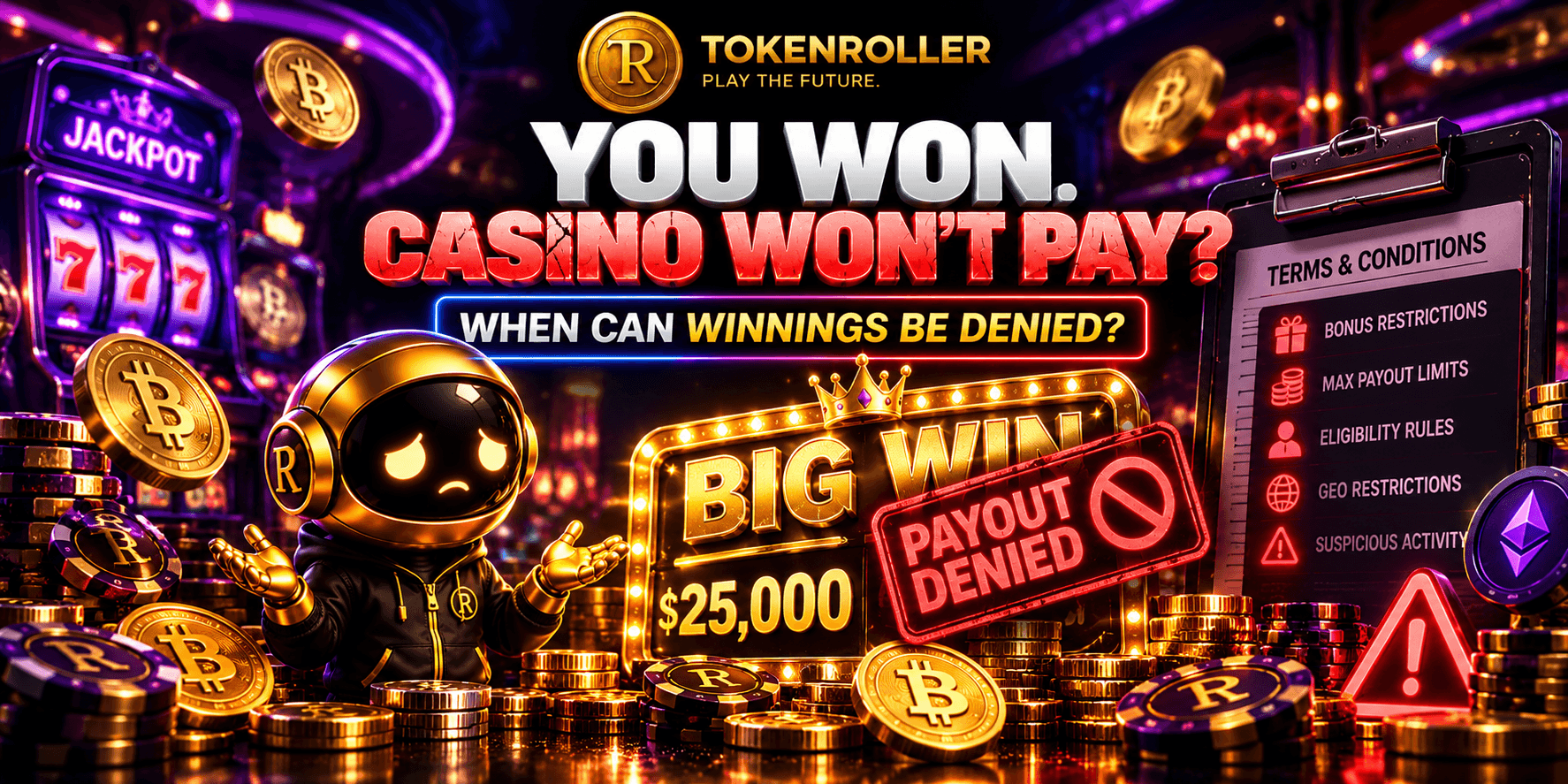
Winning at an online casino should be the exciting part of the experience. You've placed your bets, the game has ended, and your account now displays a balance higher than the amount you originally deposited. But when you request a withdrawal, something unexpected happens: the casino refuses to process your payment, reduces your winnings or claims that you've violated a rule you barely knew existed.
For cryptocurrency players, this situation can be particularly frustrating. Bitcoin and stablecoin transfers are often promoted as fast, transparent payment methods, creating an expectation that withdrawing winnings should be just as straightforward as depositing. Yet a successful casino win and an approved withdrawal are two different things, and cryptocurrency doesn't automatically remove the contractual conditions governing online gambling.
So, can a crypto casino legally refuse to pay your winnings? The answer depends on the circumstances, the operator's terms, applicable gambling regulations and whether the casino has a legitimate basis for withholding payment. Some disputes arise from genuine rule violations, while others involve ambiguous conditions, inconsistent enforcement or potentially unfair operator behavior.
Understanding the difference can help players recognize warning signs before depositing and make more informed decisions when a withdrawal dispute occurs.
Why Crypto Casinos Sometimes Refuse to Pay Winnings
Most crypto casinos operate under terms and conditions that define how accounts can be used, which games are eligible for promotions, how withdrawals are processed and what happens when the operator suspects a violation. By creating an account and playing, customers generally enter into a contractual relationship with the casino, although the enforceability of individual terms depends on the applicable law.
That means a winning balance isn't necessarily an unconditional promise of immediate payment. A casino may review transactions, verify account eligibility or investigate suspected breaches of its rules before approving a withdrawal. For example, a player who uses a bonus in a way that violates clearly disclosed wagering restrictions may face different withdrawal conditions from someone who plays exclusively with deposited funds.
However, the existence of terms and conditions doesn't give an operator unlimited authority to confiscate legitimate winnings. Casino rules must still be considered in light of applicable laws, licensing requirements and standards of fair treatment. A clause that appears in an agreement isn't automatically enforceable simply because the operator included it.
The most important question is whether the refusal is supported by a clearly communicated, legitimate and consistently applied rule rather than an arbitrary decision made after a customer wins.
Bonus Terms Are One of the Biggest Sources of Disputes
Casino bonuses can look attractive, especially when they promise additional funds, free spins or enhanced playing opportunities. But promotional offers frequently come with restrictions that aren't immediately obvious from the headline.
Wagering requirements are a common example. A bonus may require a certain amount of eligible betting activity before associated winnings can be withdrawn. Other conditions can limit the maximum stake permitted while a bonus is active, exclude particular games or cap the amount that can ultimately be withdrawn from promotional play.
Consider a player who accepts a bonus and later wins a substantial amount on a game that doesn't qualify under the promotion's rules. If the restriction was clearly disclosed and validly applied, the casino may have grounds to exclude some or all bonus-related winnings. The outcome can be different when the conditions are hidden, contradictory or introduced after the relevant gameplay.
Disputes can also arise when casinos apply bonus rules to deposits or winnings that should not have been affected by the promotion. This is why it's important to understand whether the operator distinguishes between deposited funds, bonus balances and winnings generated from each.
A legitimate bonus restriction should be understandable before the player accepts the offer, not discovered only after a successful withdrawal request.
Maximum Payout Limits and Withdrawal Restrictions
Another area that can cause confusion is the difference between a maximum payout and a withdrawal limit. These terms sound similar but can have very different consequences.
A maximum payout determines how much a player can receive from a particular game, promotion or category of winnings. A withdrawal limit, by contrast, generally controls how much money can be transferred out of an account during a specified period. A casino might allow a large legitimate win while restricting how quickly the player can withdraw the full amount.
Some operators also impose maximum cashout limits on bonus-derived winnings. For instance, a promotion might specify that only a limited amount can be withdrawn regardless of how much the bonus balance grows. Such conditions can materially affect the value of an offer and should be disclosed prominently enough for players to understand them.
Problems arise when casinos advertise large potential prizes but fail to communicate meaningful payout restrictions or when an operator attempts to apply a limit that wasn't part of the applicable rules at the time of play.
Players should therefore distinguish between a payment being delayed because of a published withdrawal schedule and winnings being permanently reduced or denied. These are separate issues, and the justification for each should be examined independently.
Can a Casino Void Winnings Because of Your Location?
Geographic restrictions are particularly relevant to crypto casinos because cryptocurrency payments can make online platforms accessible across national borders. However, the ability to send Bitcoin or USDT to a casino doesn't automatically mean that the operator is legally permitted to accept players from every country.
Casinos may restrict customers based on their country of residence, physical location, age or other eligibility criteria. Depending on applicable rules and the circumstances, violations can result in account restrictions, cancelled bets or disputes over winnings.
The situation becomes more complicated when an operator knowingly accepts deposits and allows gameplay from a restricted location but later relies on that restriction to deny payment. Whether such conduct is lawful or fair depends on the relevant jurisdiction, the casino's disclosures and the facts of the case.
Using a VPN or providing inaccurate location information can also create additional problems, particularly when it violates the casino's stated eligibility rules.
Before registering, players should verify that the platform accepts customers from their jurisdiction rather than assuming that cryptocurrency support guarantees unrestricted international access.
When Fraud and Account Abuse Are Suspected
Casinos may also refuse or delay payments while investigating suspected fraudulent activity, compromised accounts, duplicate registrations, collusion or manipulation of promotional offers. These investigations can serve legitimate purposes, including protecting customers and maintaining the integrity of the platform.
However, accusations of fraud shouldn't automatically be treated as proof that wrongdoing occurred. A casino should have a reasonable basis for its actions and follow applicable procedures when reviewing disputed activity. Where possible, the operator should explain the nature of the restriction without compromising legitimate security investigations.
Players may encounter additional verification requests during these reviews, even at casinos that advertise simplified registration or No-KYC gameplay. As we've discussed in our previous TokenRoller guides, No KYC doesn't always mean that identity checks can never occur.
The key distinction remains whether the investigation is conducted under transparent and applicable rules or whether vague allegations are being used to avoid paying legitimate winnings.
What If the Casino Changes Its Terms After You Win?
One of the most concerning scenarios involves an operator attempting to enforce new or modified conditions against gameplay that occurred before those changes were introduced.
Casino terms may be updated over time, and operators can have legitimate reasons to revise their policies. But that doesn't necessarily mean newly introduced restrictions can fairly or lawfully be applied retroactively to previously completed bets.
For example, if a casino advertised a particular promotion with defined cashout conditions and later reduced the maximum permitted payout, a dispute could arise if the operator attempted to apply the revised limit to winnings already generated under the earlier offer.
The legal outcome depends on the applicable jurisdiction, contractual arrangements and consumer-protection rules. Nevertheless, preserving copies of promotional conditions and relevant terms can be extremely valuable if a disagreement develops.
A trustworthy operator should communicate material changes clearly and avoid creating the impression that it can rewrite the rules after learning the outcome of a player's bets.
What Can You Do If a Crypto Casino Refuses to Pay?
If a withdrawal is denied, the first step is to request a clear written explanation identifying the specific rule or reason behind the decision. Rather than relying solely on a general statement such as "terms violated," ask the casino to explain which conditions apply and how the relevant activity allegedly breached them.
Preserving documentation is equally important. Transaction hashes, screenshots of account balances, betting histories, bonus conditions, withdrawal requests and support conversations may help establish what happened. If the operator later changes its explanation, those records can provide a useful timeline.
Where the casino offers an internal complaints process, submitting a structured complaint with supporting evidence is usually a sensible next step. Depending on the operator's licensing arrangements and jurisdiction, players may also be able to approach a gambling regulator, an approved alternative dispute resolution service or another relevant authority. Not every license provides the same protections or complaint mechanisms, and some offshore arrangements may offer limited practical remedies.
It's also important to avoid third parties promising guaranteed recovery of withheld cryptocurrency in exchange for advance payments. A legitimate dispute doesn't become easier to resolve simply because someone claims to have a special blockchain recovery method.
Although cryptocurrency transactions are often irreversible, that doesn't mean players necessarily have no legal or contractual remedies against an operator. The availability and effectiveness of those remedies depend on the circumstances.
How to Reduce the Risk of Unpaid Winnings
The most useful precautions begin before a player deposits cryptocurrency. Reviewing the casino's withdrawal policies, bonus conditions, payout limits and eligibility requirements can reveal restrictions that might otherwise appear only after a win.
Independent reviews can provide additional context, particularly when they examine actual withdrawal experiences rather than simply repeating promotional claims. However, reviews should also be evaluated critically, as affiliate relationships and incomplete information can influence how casinos are presented.
It's worth checking whether the operator clearly identifies its legal entity and licensing information, explains its complaints procedure and publishes understandable terms. A casino with transparent rules isn't guaranteed to handle every dispute perfectly, but it gives players a stronger basis for understanding their obligations.
Finally, remember that Provably Fair technology, where available, addresses the verifiability of certain game outcomes rather than the enforceability of withdrawal obligations. A game can produce a verifiable result while the operator still disputes payment for reasons unrelated to the randomness of the game.
Final Thoughts
A crypto casino can sometimes have legitimate grounds to refuse or adjust winnings, particularly when clearly disclosed and enforceable conditions have been violated. Bonus restrictions, account eligibility, suspected fraud and specific payout rules can all influence whether a withdrawal is approved.
But these powers are not unlimited. A casino's decision can still be challenged when conditions are misleading, inconsistently enforced, unfair or contrary to applicable laws and licensing requirements.
Cryptocurrency may make deposits and withdrawals technically efficient, but it doesn't remove the need for transparent rules, responsible operators and effective dispute resolution.
For players, the most important lesson is to understand the conditions before betting, preserve records when disputes occur and recognize that a winning balance is only as reliable as the operator responsible for honoring it.
Winning a game is one thing. Being confident that legitimate winnings will be paid is another.