
Can a Crypto Casino Freeze Your Funds? What Players Should Know

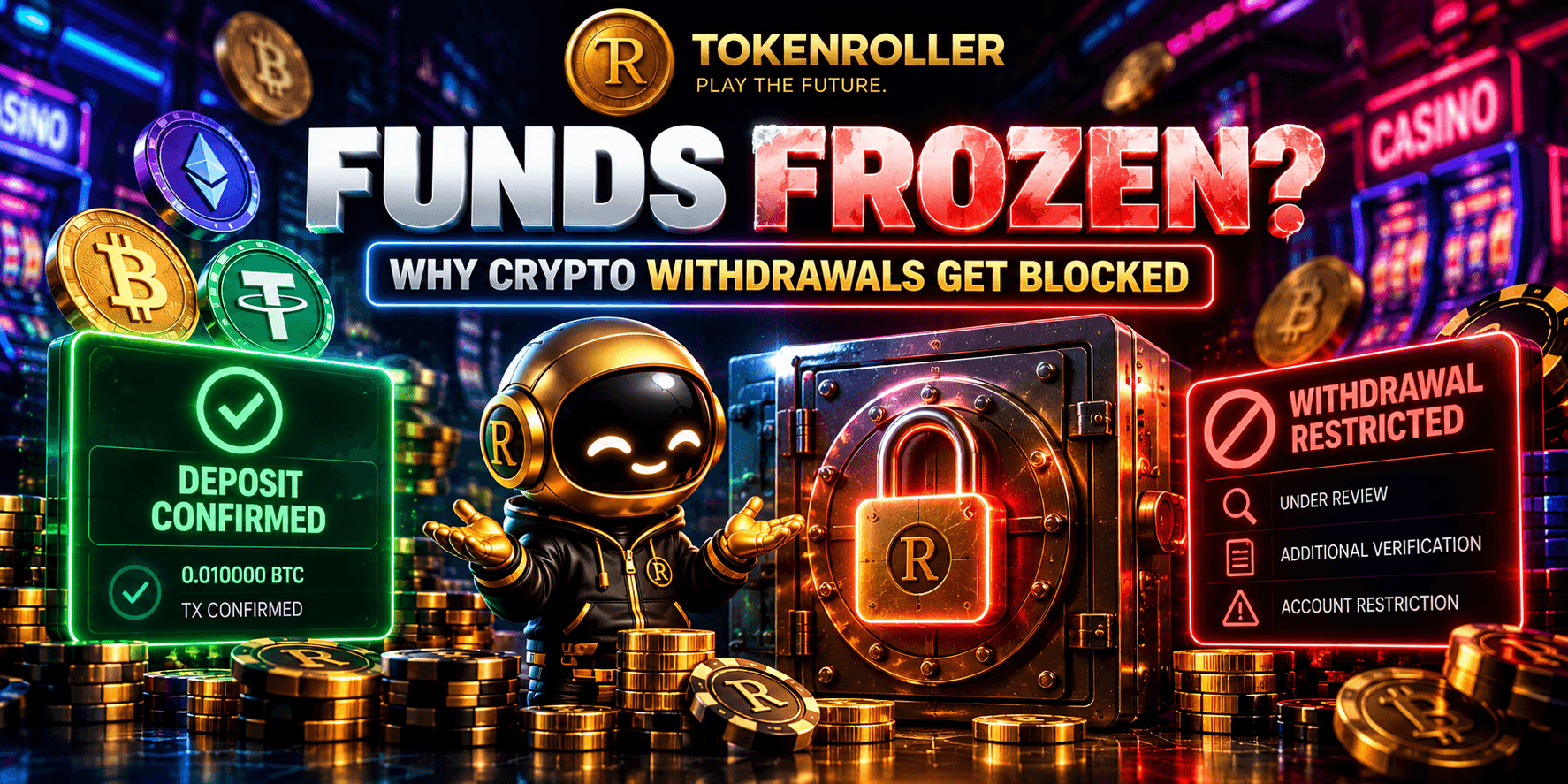
Cryptocurrency is often associated with financial freedom, fast transactions and greater control over personal funds. When you send Bitcoin, Ethereum or USDT to an online casino, the blockchain can confirm that your payment has arrived, and your casino balance may appear within minutes. But what happens if you later try to withdraw your winnings and discover that your account has been restricted or your funds are temporarily unavailable?
It's a situation that raises an important question: Can a crypto casino actually freeze your money? The short answer is yes. While blockchain transactions operate according to decentralized network rules, the funds held inside most crypto casino accounts are controlled by the operator or its payment infrastructure. That means a casino may have the technical ability to restrict withdrawals, suspend accounts or place balances under review, even when the original cryptocurrency deposit was successfully confirmed.
Not every restriction indicates dishonest behavior, however. Some are connected to legitimate security procedures, regulatory obligations or account investigations, while others can raise serious concerns about an operator's transparency and reliability. Understanding the difference is essential before trusting any casino with your cryptocurrency.
Why Your Crypto Can Be Restricted After Depositing
One of the biggest misconceptions about crypto gambling is that using cryptocurrency automatically gives players complete control over their money throughout the entire casino experience. In reality, that control usually changes once the deposit reaches a custodial platform.
When you transfer crypto from a self-custody wallet to a casino-controlled address, the transaction takes place on the blockchain. After confirmation, the operator credits your account through its internal accounting system. From that point onward, your displayed balance generally represents funds that the casino owes you under its terms rather than cryptocurrency you can independently transfer using your own private keys.
This distinction explains why a casino can restrict withdrawals without reversing or interfering with the original blockchain transaction. The deposit may be final on-chain, but access to the internal account balance still depends on the operator's systems and policies.
Blockchain confirmation proves that a transaction occurred. It doesn't guarantee unrestricted access to funds held by a third-party platform.
Legitimate Reasons a Casino Might Freeze Funds
There are circumstances in which temporary restrictions can be reasonable. Casinos may investigate suspicious account activity, unusual transaction patterns, suspected account takeovers or potential violations of their published rules. Depending on the operator's jurisdiction and compliance obligations, additional identity verification or anti-money-laundering checks may also be required.
For example, a casino might temporarily restrict a withdrawal if its security systems detect an unfamiliar login followed by a request to transfer the entire account balance to a newly added wallet address. In that situation, additional checks could help protect the legitimate account holder from unauthorized withdrawals.
Bonus-related disputes are another possibility. If a player accepts a promotion with specific wagering requirements, maximum bet restrictions or excluded games, the casino may review whether those conditions were followed before approving a withdrawal. Such investigations should still be handled according to clearly disclosed terms rather than arbitrary decisions made after a player wins.
The existence of a security review isn't automatically suspicious. What matters is whether the restriction has a legitimate basis, whether the operator explains what it reasonably can, and whether there is a credible process for resolving the issue.
When a Frozen Balance Becomes a Red Flag
The situation becomes more concerning when restrictions appear without meaningful explanation or continue indefinitely without a clear resolution process. A casino that repeatedly changes its requirements, requests documents unrelated to any reasonable verification purpose or provides contradictory information about withdrawal eligibility deserves closer scrutiny.
Particularly troubling are situations in which players are told they must make another deposit, pay a separate unlocking fee or send additional cryptocurrency to release an existing balance. Requests for extra payments simply to unlock supposedly available winnings should be treated as serious warning signs, especially when they involve transferring funds to an unfamiliar wallet.
Another concern is inconsistency between marketing promises and actual withdrawal policies. A casino might advertise instant withdrawals or No-KYC gambling while retaining extensive discretionary powers in its terms. Such conditions aren't necessarily improper by themselves, but players should understand them before depositing rather than discovering them only after requesting a payout.
A reliable operator should make its withdrawal rules reasonably accessible and avoid creating misleading expectations about when funds can be restricted.
Can Provably Fair Technology Protect Your Balance?
Provably Fair technology is frequently promoted as a major advantage of crypto casinos, but its protections have important limits. A properly implemented Provably Fair system can allow players to verify aspects of how individual game outcomes were generated, helping establish that certain results weren't secretly changed after bets were placed.
However, Provably Fair doesn't guarantee that a casino will process withdrawals or maintain unrestricted access to player balances. Game fairness and financial custody are separate issues, and an operator can offer verifiable games while still having questionable payment practices, weak customer support or unclear account restrictions.
The same distinction applies to blockchain transparency. Being able to inspect your original deposit on a blockchain explorer doesn't prove that the casino has sufficient reserves, maintains accurate internal records or will approve your withdrawal. Those questions depend on the operator's financial management, security procedures and willingness to honor its obligations.
What Should You Do If Your Crypto Is Frozen?
If a casino restricts your account or withdrawal, the first step is to identify the stated reason and review the relevant terms. Contact customer support through the operator's official channels and request a written explanation of the restriction, including any verification requirements and the next steps needed to resolve it.
It's also worth preserving records of your deposits, transaction hashes, withdrawal requests, account notifications and conversations with support. Screenshots of relevant terms and promotional conditions can be useful if a disagreement develops, particularly when the casino's explanation changes over time.
If legitimate verification is required, use the operator's official secure submission process rather than sending sensitive documents through unverified contacts. If the dispute remains unresolved, investigate whether the casino has a relevant regulator, licensing authority or independent complaint mechanism that can review the matter. Available remedies vary considerably by jurisdiction and operator, so recovery cannot be guaranteed.
Most importantly, avoid sending additional cryptocurrency merely because someone claims it will unlock your existing funds. A frozen balance is already a financial concern; an unnecessary second payment can make the situation considerably worse.
How to Reduce the Risk Before Depositing
The most effective protection begins before cryptocurrency leaves your wallet. Reviewing a casino's withdrawal conditions, account restrictions, verification policies and reputation can reveal potential problems that aren't immediately visible from its homepage.
Pay particular attention to how the operator handles disputed withdrawals, whether its terms clearly describe circumstances in which funds may be withheld, and whether there are credible reports of unresolved payment problems. It's also sensible to avoid leaving unnecessarily large unused balances on custodial gambling platforms.
For players unfamiliar with an operator, starting with a modest amount and checking how ordinary withdrawals are handled may provide useful information, although a successful small withdrawal doesn't guarantee that future withdrawals will be trouble-free.
Ultimately, crypto casinos should be evaluated as custodial financial counterparties as well as gambling platforms. Their games, bonuses and payment options matter, but so does their ability to return legitimate customer funds reliably.
Final Thoughts
Crypto casinos can restrict player funds because depositing cryptocurrency into a custodial gambling platform generally transfers direct control of those assets to the operator or its payment infrastructure. Even when a deposit is fully confirmed on the blockchain, withdrawals can remain subject to internal security checks, verification procedures and account rules.
Some restrictions are legitimate, particularly when they protect accounts or satisfy applicable obligations. Others may signal poor transparency, unreasonable conditions or potentially dishonest behavior. The distinction often becomes clearer through the operator's published terms, the consistency of its explanations and the availability of a meaningful resolution process.
The most important lesson is that cryptocurrency payments don't eliminate custodial risk. Blockchain technology can make transfers independently verifiable, but it cannot force a casino to release funds held within its internal system.
Before depositing, understand who controls your cryptocurrency, what restrictions may apply and how withdrawals are handled. In crypto gambling, choosing a trustworthy operator matters just as much as choosing the right wallet or blockchain network.