
Are Crypto Casinos Legal in 2026? A Global Overview

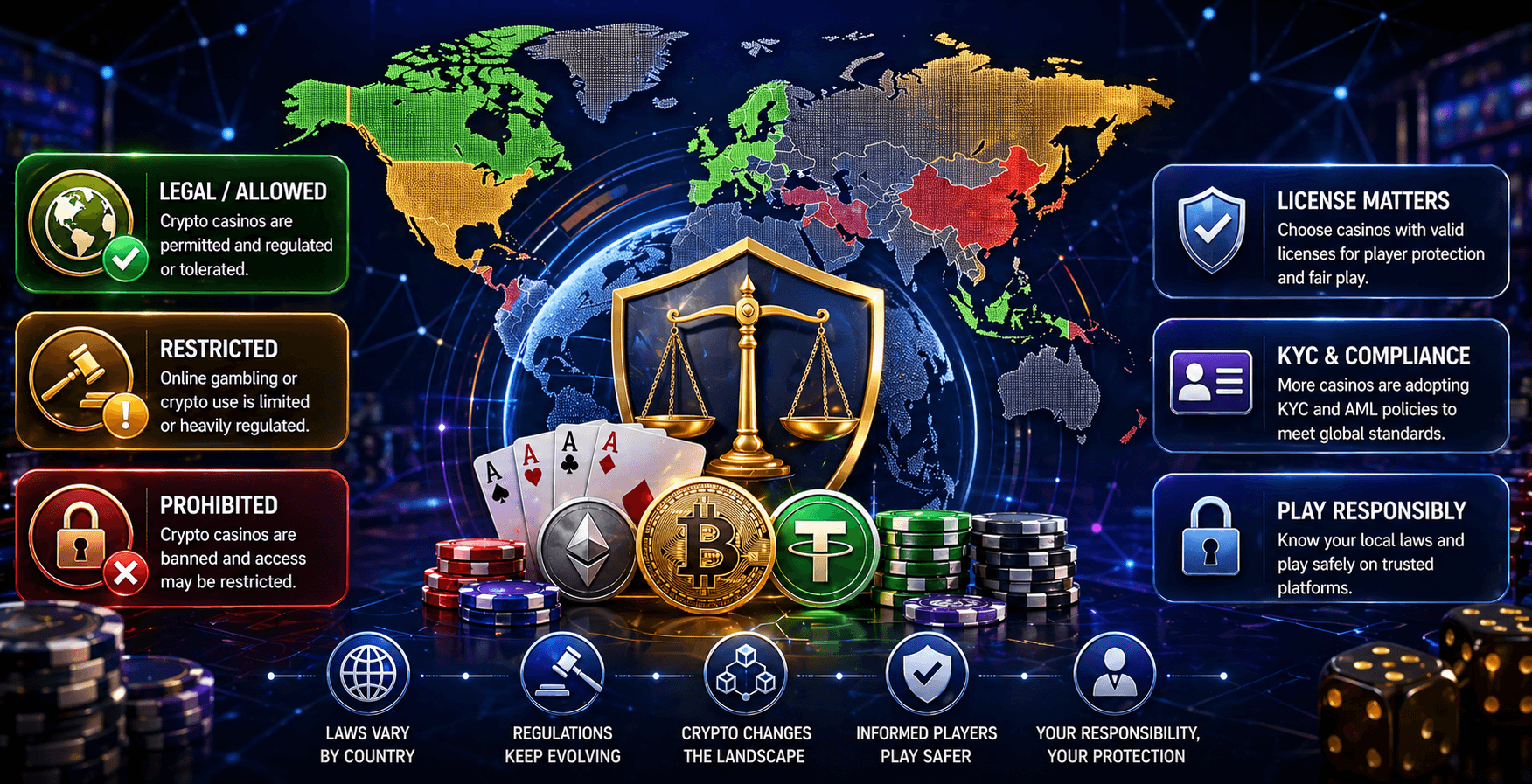
As crypto casinos continue to grow in popularity, one question comes up more than any other:
are they actually legal?
The answer isn’t simple. Unlike traditional online gambling, crypto casinos exist in a rapidly evolving legal environment that varies from country to country. In 2026, their legality depends on local regulations, how governments treat cryptocurrency, and how strictly online gambling laws are enforced.
For players, understanding this landscape isn’t just helpful — it’s essential.
Why Crypto Casinos Operate in a Legal Grey Area
Crypto casinos don’t fit neatly into traditional legal frameworks. They operate globally, accept decentralized payments, and often don’t rely on banking systems.
This creates a challenge for regulators. Traditional gambling laws were designed around centralized operators and fiat payments. Crypto casinos, on the other hand, allow users to interact directly through blockchain transactions, often across borders.
As a result, many countries haven’t fully defined how to regulate them — leaving crypto gambling in a legal grey zone.
Where Crypto Casinos Are Generally Allowed
In some parts of the world, crypto casinos are either accepted or tolerated.
Regions with established online gambling markets — particularly in parts of Europe and Latin America — tend to be more open. In these areas, players can often access crypto casinos without major restrictions, especially if the platform itself is licensed offshore.
That said, “allowed” doesn’t always mean fully regulated. In many cases, governments simply haven’t introduced specific laws yet, which creates room for crypto casinos to operate.
Countries with Strict or Unclear Restrictions
On the other side, some countries take a much stricter approach.
In regions where online gambling is banned or heavily regulated, crypto casinos often fall into the same category. Additionally, countries with tight financial controls or restrictions on cryptocurrency may limit or discourage access to these platforms.
Even when access isn’t technically blocked, legal risks can still exist. That’s why it’s important for players to understand not just whether they can access a crypto casino — but whether they should.
The Role of Licensing in Crypto Casinos
Licensing plays a key role in separating trustworthy platforms from risky ones.
Most crypto casinos operate under offshore licenses, commonly issued in jurisdictions like Curaçao. These licenses provide a basic level of oversight and give platforms a degree of legitimacy.
However, not all licenses are equal. Some regulators enforce stricter standards than others, and enforcement can vary significantly. That’s why players should always verify licensing information and not rely on it alone as a guarantee of safety.
How Cryptocurrency Changes the Legal Landscape
Crypto itself adds another layer of complexity.
Unlike traditional payments, blockchain transactions are decentralized and don’t require banks or intermediaries. This makes them harder to monitor and regulate, especially across borders.
For players, this means greater freedom — but also greater responsibility. Without the protections of traditional financial systems, users need to be more aware of where and how they play.
KYC and Compliance Trends in 2026
As regulation evolves, more crypto casinos are introducing compliance measures such as KYC (Know Your Customer) procedures.
This means players may be asked to verify their identity, especially when making large withdrawals. While this reduces anonymity, it also helps platforms align with global anti-money laundering standards.
In 2026, the trend is clear: even crypto casinos are moving toward more structured compliance.
How Players Can Stay Safe
Regardless of local laws, there are a few core principles that apply everywhere.
Players should focus on using reputable, reviewed platforms and avoid unknown or unverified casinos. Understanding how withdrawals work, checking licensing details, and using secure wallets are all part of playing responsibly.
It’s also important to stay informed about local regulations, as laws can change quickly in the crypto space.
What This Means for Crypto Casino Players
In 2026, crypto casino legality is still evolving.
Some countries are becoming more open to crypto gambling, others are tightening restrictions, and many are still figuring out how to regulate it. This creates a mixed global landscape where legality depends heavily on location.
For players, this means there’s no universal answer — only informed decisions.
Final Thoughts
Crypto casinos are not universally legal or illegal. Instead, they exist within a shifting global framework shaped by both gambling laws and cryptocurrency regulation.
As the industry matures, clearer rules will likely emerge. Until then, players need to rely on awareness, research, and responsible choices.
Crypto gambling offers flexibility and innovation — but understanding the legal side is just as important as understanding how the games work.